
St Andrew Hall
St Andrew Hall Paintings

‘Baptism in Scotland’ (1850)
‘Baptism in Scotland’ (1850)
More information
John Philip was born in Aberdeen in 1817 and lived at 13 Skene Square. Determined to become a painter he stowed away on a ship to London in 1834 and spent a whole day looking at art in the Royal Academy. He became an extremely successful painter gaining the patronage of Queen Victoria and Prince Albert. His daughter Anna was born in 1849 and so it is thought this depiction in 1850 of a family baptism taking place in a Highland home reflects the joy of her arrival in Philip’s life. It is the second in a pair of paintings, the first one being ‘Presbyterian Catechising’ and both works seem to show the same couple at different stages of life with. At least three or four generations of the family are incorporated into this elaborate composition. Although painted in 1850 it is likely the scene is from the time of the Jacobite Risings of 1745. The original was purchased by Aberdeen Art Gallery and Museums in 1983.
Heidelberg Catechism, Lord’s Day 27
Q74. Are infants also to be be baptised? A. Yes, since they, as well as their parents, belong to the covenant and people of God, and both redemption from sin and the Holy Spirit, who creates faith, are through the blood of Christ promised to them no less than to their parents. Therefore, by baptism, as a sign of the covenant, they must be grafted into the Christian Church, and distinguished from the children of unbelievers, as was done in the Old Covenant by circumcision, in place of which in the New Covenant baptism was instituted.

‘‘Presbyterian Catechising’ (1847)
National Galleries of Scotland
John Phillip (1817-67)
more information
“Presbyterian Catechising” by John Phillip shows a Scottish family gathered in their home as a minister teaches them the catechism. This practice was once central to Presbyterian life, helping children and adults learn the truths of the Bible in a clear and orderly way. The scene reflects everyday faith in Scotland, where family worship and personal responsibility were highly valued. While not set in Aberdeen, it captures a tradition that shaped the city’s spiritual life for centuries. The simple furniture, open Bible, and attentive faces remind us how seriously earlier generations took knowing God and passing on the faith to the next generation.
Heidelberg Catechism, Lord’s Day 1
Q1. What is your only comfort in life and in death? A. That I, with body and soul, both in life and in death, am not my own, but belong to my faithful Saviour Jesus Christ, who with His precious blood has fully satisfied for all my sins, and redeemed me from all the power of the devil; and so preserves me, that without the will of my Father in heaven not a hair can fall from my head; indeed, that all things must work together for my salvation. Wherefore, by His Holy Spirit, He also assures me of eternal life, and makes me heartily willing and ready henceforth to live unto Him.

‘‘The Covenanters’ Communion’ (1840)
National Galleries of Scotland
John Phillip (1817-67)
more information
George Harvey’s painting portrays a secret outdoor Communion service during the 1600s. At this time, many Scots resisted attempts by the crown to control the church and force worship practices they believed were unbiblical. These men and women, known as Covenanters, sometimes met in hidden places for worship and the Lord’s Supper, risking their lives to stay faithful to Christ. Harvey’s painting shows the deep seriousness and quiet courage of such gatherings. Though the scene comes from the south of Scotland, the same convictions were held across the nation, including in Aberdeen, where the struggle over Christ’s authority in the church was deeply felt.
‘Now bread, — the symbol of incarnate God—
Is broken, — blest, — distributed; — and wine,
Apt emblem of the Saviour's cleansing blood,
Diffuses heavenly rapture thro' the line
Of reverential worshippers. — Divine
The element in which their souls did move;
Like the beloved disciple they recline
Each on Emanuel's bosom! — with what love
These aspirations rise up to the throne above!—'
Excerpt from ‘The Covenanters Communion’, by David Vedder (1828)
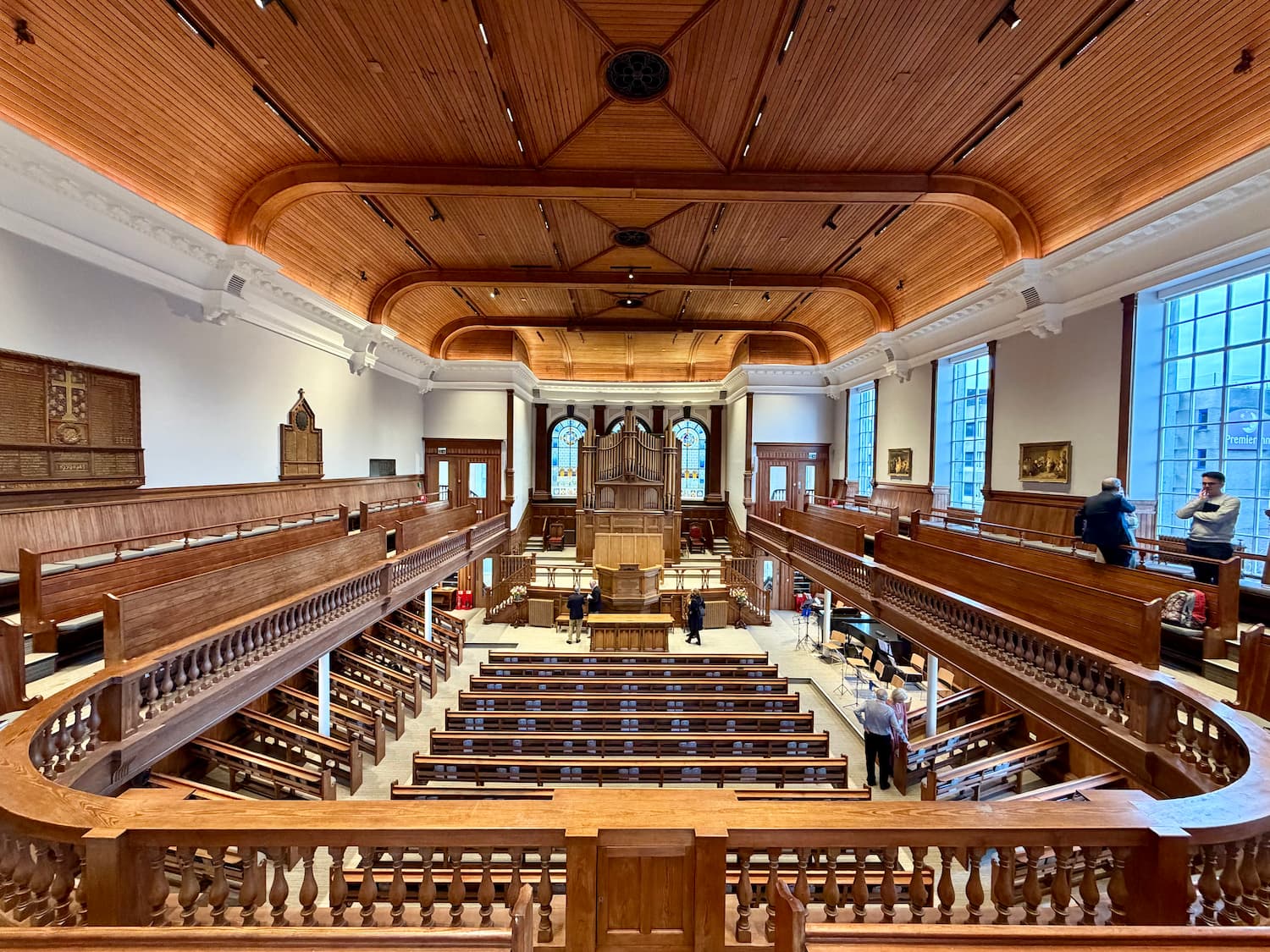
Andrew is the Patron Saint of Scotland. The white cross on a blue background is a Saltire, and a cross is said to be where Andrew met his death. The name has long been associated with many places in Scotland, not least here in Aberdeen, and the name St Andrew Hall recalls the St Andrew’s Church congregation on King Street (1903) who joined with the congregation in this building in 1967, forming the North Church of St Andrew. The Gospels recount how Andrew and his brother Simon Peter were called by Jesus to become fishers of men. This space is dedicated to the church’s primary calling: to declare the praises of him who called us out of darkness into his life, to receive his life-giving Word in the preaching of the gospel, and to receive his gracious promises in the covenant signs and seals of baptism and the Lord’s Supper.
In the St Andrew Hall there are three original stained glass windows (1904-1905) located at the front of the building above the Shoe Lane entrance. There are also three pieces of art along the West North Street side of the Gallery added by the Trinity congregation in 2026. On the opposite Gallery wall, facing these paintings, are four memorials from The Great War (1914-1918) and World War II (1939-1945), two of which remember those from the Free North and North Church who gave their lives, and two of which remember the dead from John Knox Church. The pulpit too is a war memorial, added in 1920, and designed by William Gauld the architect of the building.
Structures tell stories: so what’s the story?
Memorials to the fallen dead of the First and Second World Wars are common in church buildings of this era. They reflect the reality that opposing an ideology such as Nazism, for instance, is a distinctly Christian commitment. It is impossible to name something as evil without a corresponding belief in goodness, truth and beauty, all of which flow from the Christian worldview.
At the same time, however, the presence of war memorials in a place of Christian worship can risk merging the cause of the gospel with national militarism. It may lead to identifying God and nation in too straightforward a way. We remember with unceasing gratitude the price others paid for our freedom—yet even more, as Christians, we “remember forward to a world restored” (Fred Kaan). It is the gospel of the Lord Jesus Christ, the slain Lamb and the conquering King, that will remake and restore the world, not the sword.
One day all the nations of the earth will “beat their swords into ploughshares and their spears into pruning hooks. Nation will not take up sword against nation, nor will they train for war any more” (Isaiah 2:4). At the end of all things, the kings of the earth will bring their splendour into the new Jerusalem (Revelation 21:24), and God’s perfect plan will be fulfilled: “to bring all things in heaven and earth together under one head, even Christ” (Ephesians 1:10). This means that one day, all of world history will be seen to be church history.
The signs and seals of God’s covenant of grace, and the teaching of the gospel to young and old, have each been administered in church history openly and in secret when needed, and they have also taken place with or without the approval of temporal governing authorities. Baptism, communion, and proclamation (in preaching, teaching and catechising) are the church’s weapons of war which show that Jesus is Lord, not Caesar. They are how the Prince of Peace “disarms our trust in power” (Kaan). Church history relativises world history.
The three paintings in the St Andrew Hall Gallery are there to show that we treasure the always overlooked and oftentimes maligned presence of the gospel in our national life.
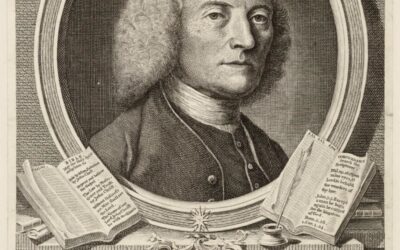
Cruden Hall
Alexander Cruden (1699-1770)
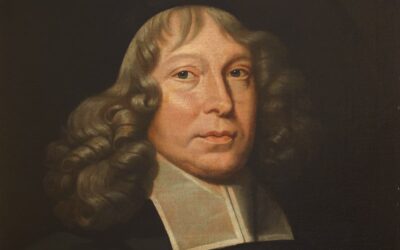
Rutherford Hall
Samuel Rutherford (c1600-1661)

Schaeffer Library
Francis Schaeffer (1912-1984)
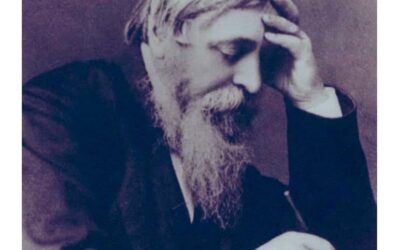
Martin Room
Hugh Martin (1822-1885)
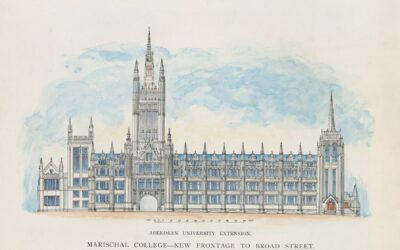
Marischal Room
George Keith (1554–1623), the 5th Earl Marischal
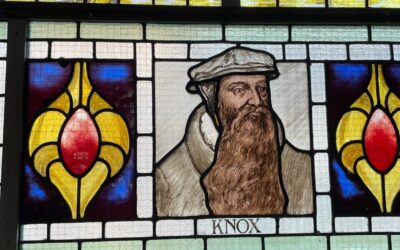
Knox Room
John Knox (c1514-1572)
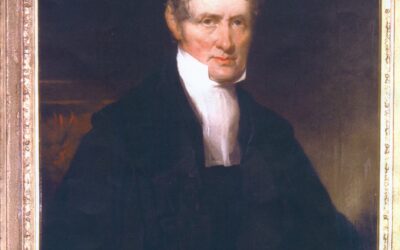
Murray Lounge
Rev Dr John Murray (d. March 1861)
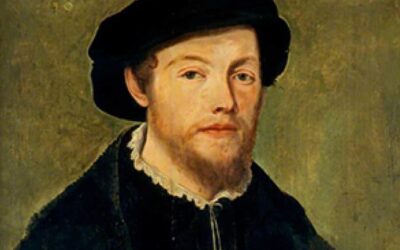
Wishart Room
George Wishart (c1513-1546)
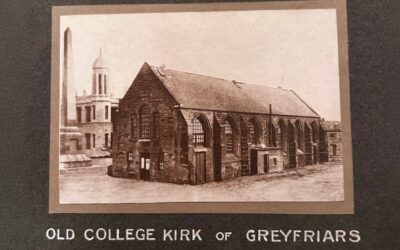
Greyfriars Loft
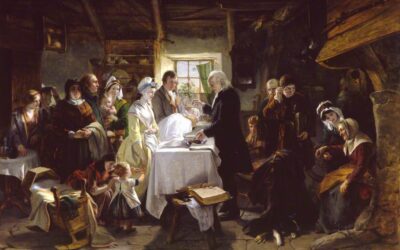
‘Baptism in Scotland’ (1850)
Aberdeen Art Gallery
John Phillip (1817-67)
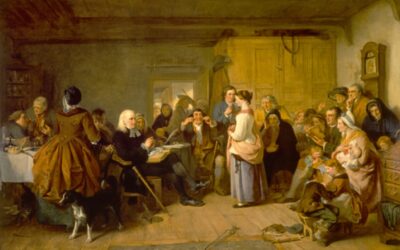
‘Presbyterian Catechising’ (1847)
National Galleries of Scotland
John Phillip (1817-67)
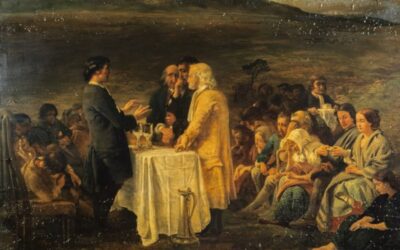
‘The Covenanters’ Communion’ (1840)
National Galleries of Scotland
Sir George Harvey (1806-1876)